Wondering if someone can identify this plant. It appears to be quite invasive. Also, thoughts on control would be appreciated.
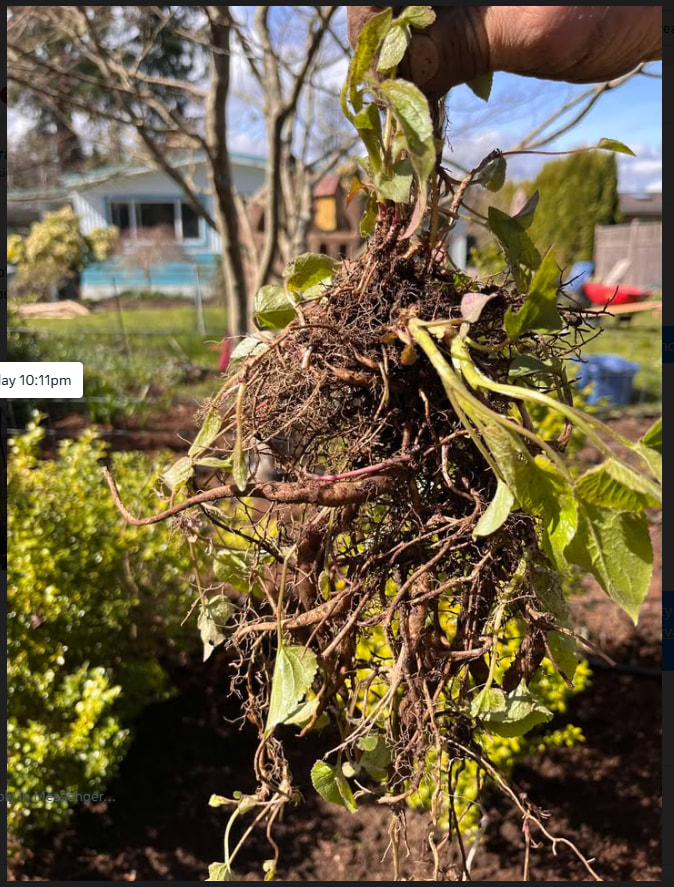
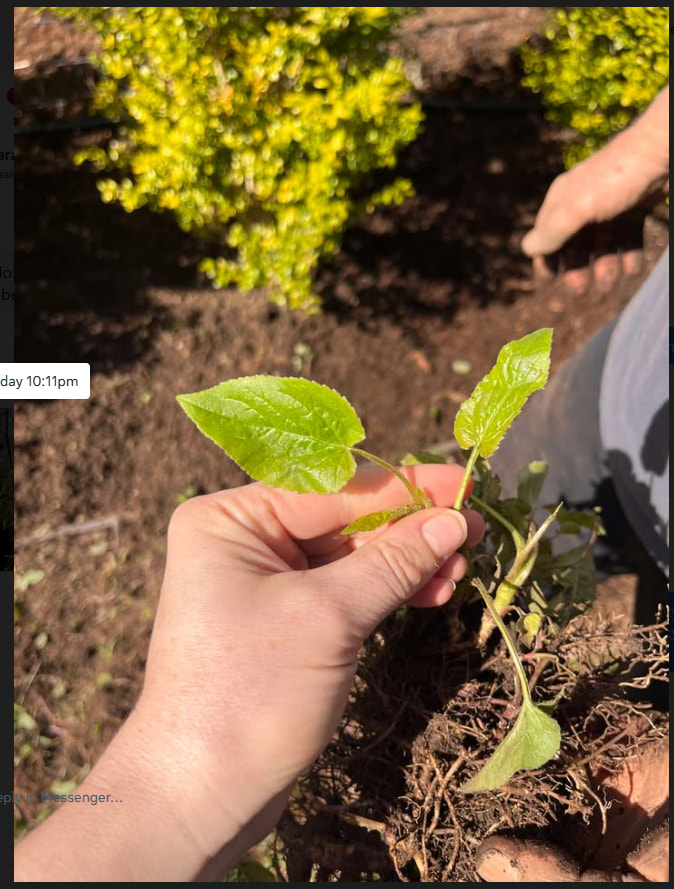
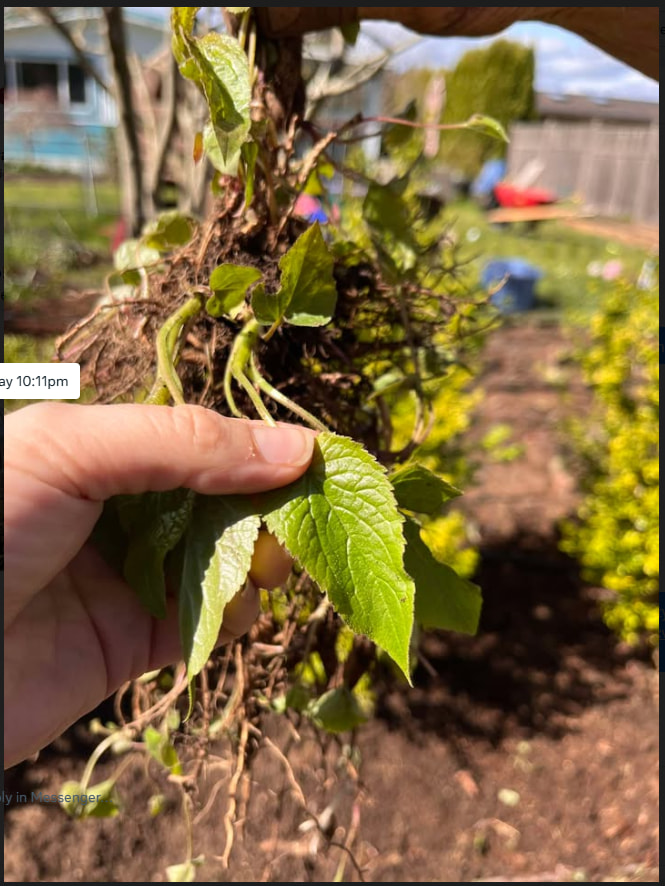
It looks like a campanula.
Possibly this (Campanula rapunculoides):
https://identify.plantnet.org/k-world-flora/species/Campanula%20rapunculoides%20L./data
I have this in my yard, and it spreads like crazy.
2 Likes
Its quite pretty. Thanks Greg…that definitely looks like the plant.
Many thanks to Milner Gardens & Woodland’s Gardening Advice line (a partnership between Vancouver Island University’s Milner Gardens & Woodland and the Vancouver Island Master Gardeners Association) for the following response:
——————————————————-
Hi Lorna,
Thank you for your question and the link to your photos. Because its still fairly early spring, the photos show only the first leaves of the season and the considerable root matrix. You likely know that the flowers of a plant are very important for proper identification so we’ve done our best to give you an answer with what the plant looks like at this time of year. If you want to be sure of its identity, you can wait until flowers begin to bloom later in the season.
At this point, we’re inclined to agree with the opinion posted to the Comox Valley Horticultural Society’s forum that it’s very likely to be Creeping Bellflower, Campanula rapunculoides. This perennial plant is listed on multiple North American invasive species websites due to its ability to proliferate with ease. The root system is a combination of tubers that store nutrients and water and horizontally-growing rhizomes, allowing it to withstand drought conditions and spread underground before popping up new shoots nearby. They can grow in full sun to full shade, from moist woodlands to dry roadsides. A plant produces 10-15 thousand seeds each year. They are notoriously difficult to eradicate.
The best options for dealing with them is multi-faceted and can take consistent, unwavering effort for several years. Digging up every piece of the root system is key, as even a tiny piece left in the soil can grow into a new plant quickly. It’s recommended to dig at least 6 inches below and around the plant. Repeated mowing will not get rid of it but can help keep it slightly subdued. Whenever you see the purple bell-shaped blooms, pick them off before they go to seed. For proper disposal, make sure to bag these plants and put them in the garbage, not in home or city compost.
In any case, it seems like you’re on the right track with digging up your unwanted guests. We wish you all the best,
Vancouver Island Master Gardener Association
Resources
- Alberta Invasive Species Council factsheet
- Wisconsin Department of Natural Resources https://dnr.wisconsin.gov/topic/Invasives/fact/CreepingBellflower
- Northern Gardener, Minnesota Horticultural Society
2 Likes