Does anyone have an idea what may be eating my tomatoes?
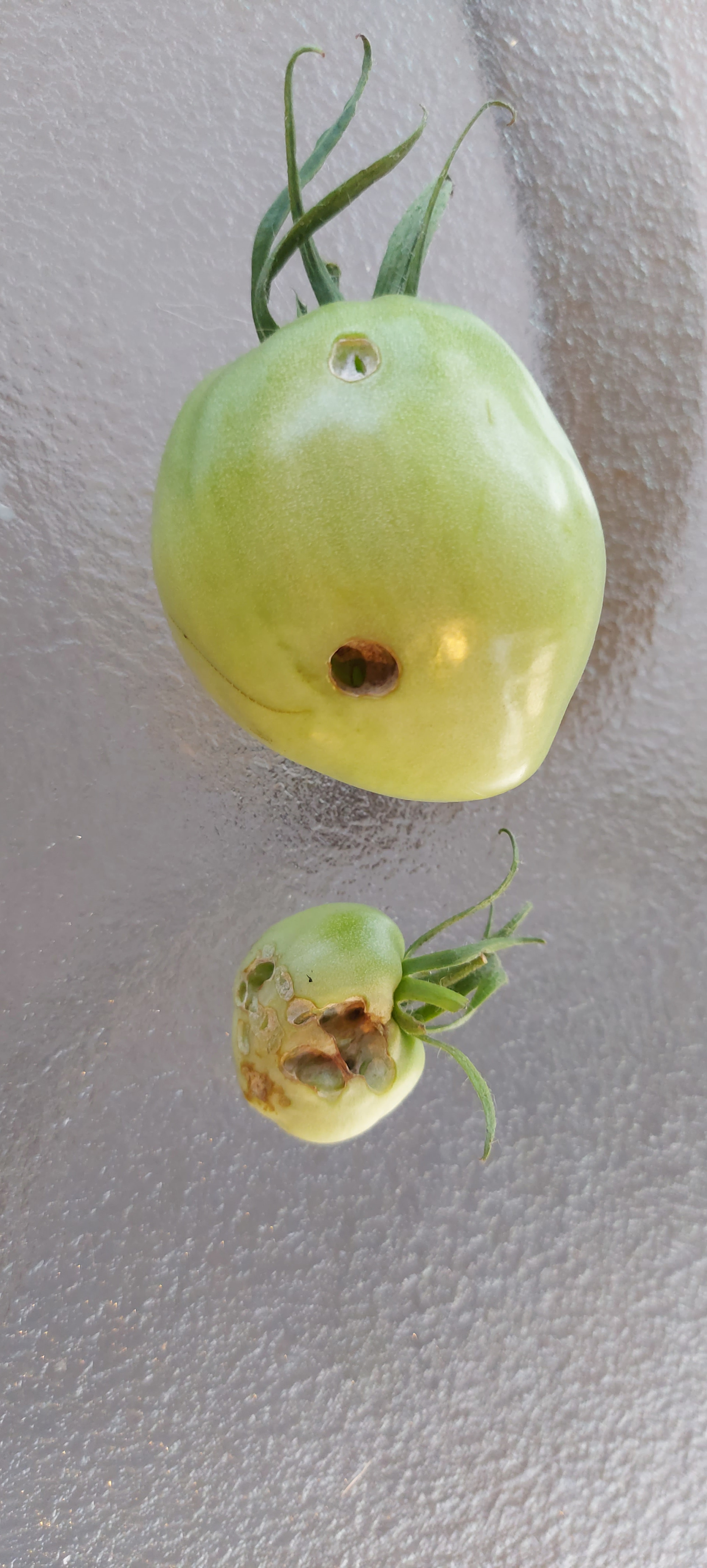
Many thanks to Milner Gardens & Woodland’s Gardening Advice line (a partnership between Vancouver Island University’s Milner Gardens & Woodland and the Vancouver Island Master Gardeners Association) for the following response:
Hi Quackers,
Thank you for the question on what may be eating your tomatoes. Based on the photo you provided, it looks like you may have a few possible culprits. Without looking around the plant and leaves, we can’t be certain which pest(s) are responsible but we’ve provided a list of pests and their damage to look for to help you narrow it down. We’ve also provided ways to remove them from your garden.
Climbing Cutworm
The most common cutworms in local gardens are the ‘climbing cutworms’, which includes the larvae of the large yellow underwing moth. Cutworm larvae come in various colours and patterns but always appear smooth skinned to the naked eye. They are fat, smooth, relatively large caterpillars, about 2-5 cm long that curl up when disturbed. Most species are mainly active at night. During the day, cutworms hide in soil or in the debris at the base of the plant.
At night, these cutworms chew large, ragged holes in leaves and new shoots. Later in the season, these pests can injure tomatoes by eating irregular holes in the surface of fruits. Tomatoes touching the ground are generally the most injured.
Pick cutworms from plants at night or unearth them from around the base of damaged plants in the morning. Squash them, drown them in soapy water or toss them on your lawn for the birds to find. This is sufficient to control cutworms in most gardens as there are usually only a few present.
Slugs and Snails
Slugs and snails are serious pests for ripening fruits that are close to the ground, such as strawberries and tomatoes. Like cutworms, they won’t contain their damage strictly to your tomatoes. They will also chew irregular holes with smooth edges in the tomato leaves.
Snail and slug damage can be confused with feeding by other pests such as earwigs, caterpillars, or other chewing insects. Look for their signature silvery mucous trails to confirm that slugs or snails caused the damage.
Here are some simple steps to take to remove slugs and snails from your tomato plants:
Spread non-toxic slug bait (the only kind you can buy in Canada) sparingly around your plants. Its active ingredient is iron which will simply cause the slugs to stop eating. It will also dissolve into the soil when it rains, adding iron to the soil.
Sprinkle food-grade diatomaceous earth around plant border. The sharp powder dries out their soft bodies, though you must reapply it after rain. Follow directions on the label carefully when using.
Water your garden in the morning so the soil and leaves dry out by nightfall. Slugs and snails love damp, dark nighttime conditions.
Go out at dusk or after dark with a flashlight and gloves to pick them up manually. Relocate them at least 20 meters away or drop them in soapy water.
Earwigs
Earwigs may chew small, shallow, irregular holes or ragged patches into the surface of green and ripening tomatoes. They will leave behind frass (bug poop) in tight and dark spaces in and around damaged plants. Earwigs can also damage the tomato leaves by chewing small, irregular holes or ragged edges in the foliage. Populations tend to build to their highest densities in mid to late summer. They are nocturnal and hide in dark, tight, and moist places during the daytime. In vegetable gardens, earwigs are most often found in highly irrigated or mulched areas.
Earwigs are considered beneficial insects because they eat lot of insects pests, so only manage when there is unacceptable crop damage. Here are three simple steps to take to move earwigs away from your tomato plants:
Remove heavy mulch, weeds or decaying matter right next to your plants where earwigs hide during the day.
Tie up heavy branches or use cages and stake so green tomatoes don’t rest directly on damp soil.
Water your garden in the morning so the soil surface dries out before nightfall.
In summary, check your plants for damage to the leaves, for frass on or around the base of your plants, for slime trails, and for the pests themselves tucked up on or near the base on your plants. This will narrow down which of these pests are eating your tomatoes. If you can’t find evidence of any of these three, reach back out to us for more information.
Vancouver Island Master Gardeners
References:
https://ipm.ucanr.edu/agriculture/tomato/cutworms/#gsc.tab=0
https://ipm.ucanr.edu/home-and-landscape/snails-and-slugs/#gsc.tab=0
This was very helpful! Thank you!