We are sharing the question below that was received recently via email so other members may benefit from the answer provided by Milner Gardens & Woodland’s Gardening Advice line (a partnership between Vancouver Island University’s Milner Gardens & Woodland and the Vancouver Island Master Gardeners Association). Many thanks for their input. Question and Answer below:
Question:
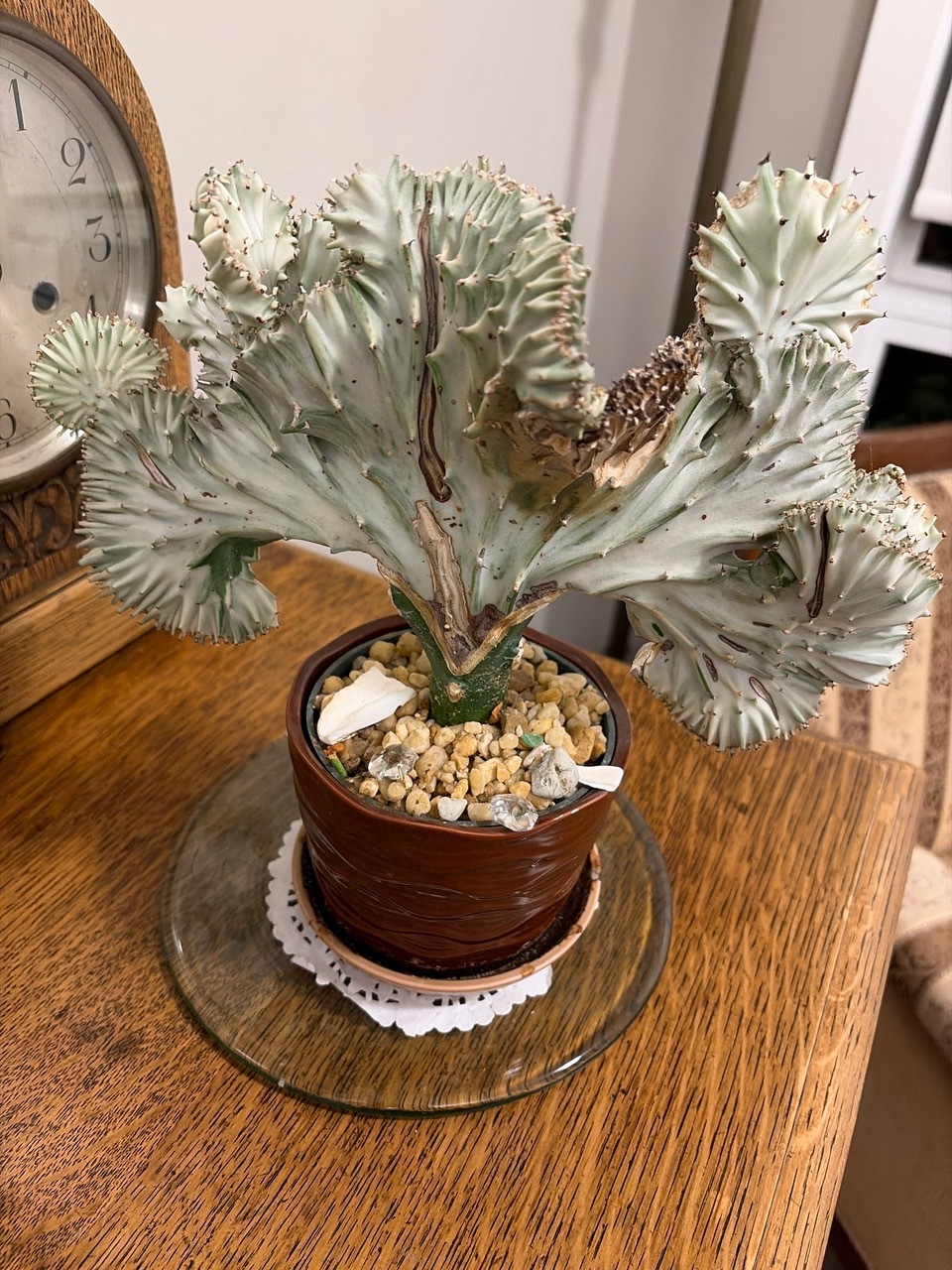
The coral plant pictured below is old and one part looks brown and dying.
Can another plant be started from the small growths on both the right and left side?
The plant was received 30 years ago and it has always stayed in the same pot. It has never been fertilized and this is the first time it has what looks like a dead spot.
Answer:
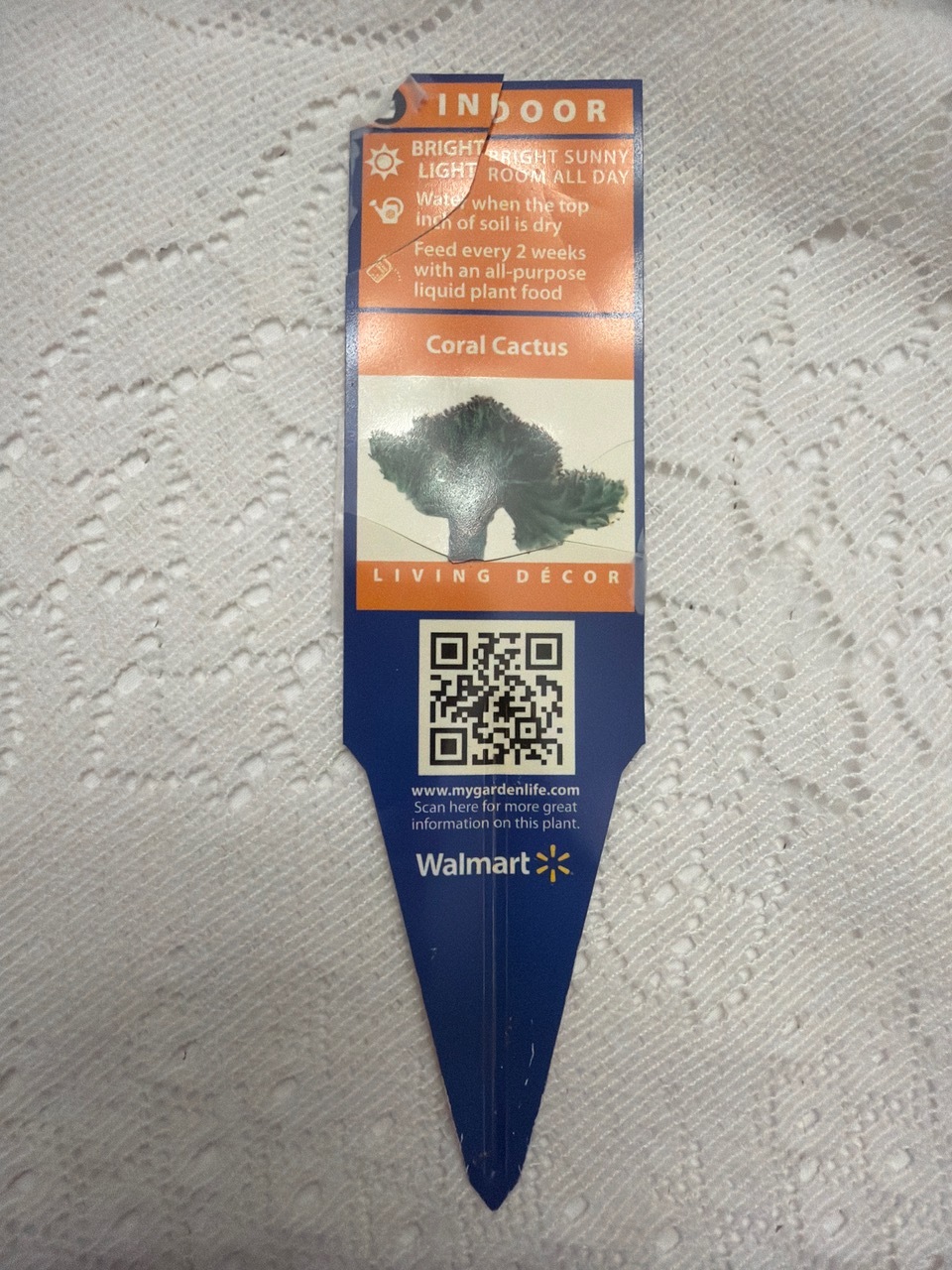
Thank you for your question. We appreciate the clear photo and original plant tag. This makes it easier for us to help you. What a fun and interesting plant.
The common name of your plant is Coral Cactus but it is actually two grafted succulents; a mutated form of Euphorbia lactea ‘Cristata’ grafted onto a stalk from Euphorbia neriifolia. A new Coral Cactus cannot be propagated by seed or cuttings. If you were to cut the budding new growth (called ‘pups’) from the crest and were successful in growing them, they would have the growth habit of a Euphorbia lactea and not the growth habit that you currently have with the Coral Cactus union. Feel free to try it, but expect a different result.
The fact that you have managed to get one to live to over 30 years means that you have been attentive in caring for it. Obviously something has changed lately, though, and there could be several reasons. The photo doesn’t show whether the brown spot is soft and mushy or hard and dried. Soft and mushy would be an indication of a serious fungal infection and bad news. Hard or dried brown spots could be the result of sunburn or a localized die-off that could be caused by age, exposure to below 16C (60F) or low nutrients.
Pruning out the affected piece in the crested fan of your Coral Cactus looks as though it may threaten the structural integrity of the plant because of the size of the necrotic patch near the middle of the fan. The plant might not recover from such an aggressive pruning and we would recommend focusing on nurturing it as-is.
Your plant has done well enough for 30 years with the routines you have in place so don’t change everything at once. Keep it in the same location. Water once the top 1” is dry and less often in winter, as overwatering can result in root rot. This plant hasn’t been repotted or fed so we do recommend repotting it using new soil, specifically a cactus/succulent potting mix. The new soil will have appropriate amounts of fertilizer in it, so you wouldn’t need to feed it until next spring. You could also upsize the pot by one pot size if you think it is required.Feeding it in the future should be done in the spring and summer months with fertilizer that is designed for cactus and succulents. When repotting, check the roots for a healthy whiteish colour. Dark coloured, smelly roots are a sure sign of root rot.
Like all Euphorbias the milky sap is toxic to both humans and pets and usually causes skin welts from contact. You will probably need assistance from someone for repotting and both people should use gloves and possibly even goggles when handling it.
We hope this information has been useful and that you will enjoy your lovely Coral Cactus for years to come!
Vancouver Island Master Gardeners
References
North Carolina State University Extension. https://plants.ces.ncsu.edu/plants/euphorbia-lactea/
Mygardenlife.com. https://mygardenlife.com/plant-library/coral-cactus-euphorbia-lactea-cristata
Royal Horticultural Society. https://www.rhs.org.uk/plants/370893/euphorbia-lactea-cristata/details
Cactus Mania. https://www.cactusmania.shop/2025/08/28/euphorbia-lactea/